3 steps to identify emission hotspots in growing companies


Disclaimer: New EUDR developments - December 2025
In November 2025, the European Parliament and Council backed key changes to the EU Deforestation Regulation (EUDR), including a 12‑month enforcement delay and simplified obligations based on company size and supply chain role.
Key changes proposed:
- New enforcement timeline: 30 December 2026 for large/medium operators, 30 June 2027 for small/micro operators
- Simplified DDS: One-time declarations for small and micro primary producers
- Narrowed scope: Most downstream actors and non‑SME traders would no longer need to submit DDSs
- New DDS requirement: Estimated annual quantity of regulated products must be included
These updates are not yet legally binding. A final text will be confirmed through trilogue negotiations and formal publication in the EU’s Official Journal. Until then, the current EUDR regulation and deadlines remain in force.
We continue to monitor developments and will update all guidance as the final law is adopted.
Key takeaways
- Emission hotspots are the specific areas of your operations that contribute most to your total greenhouse gas footprint, often concentrated in Scope 3 supply chain activities.
- Identifying hotspots requires assessing operations, collecting emissions data across all scopes and analyzing patterns to prioritize reduction efforts.
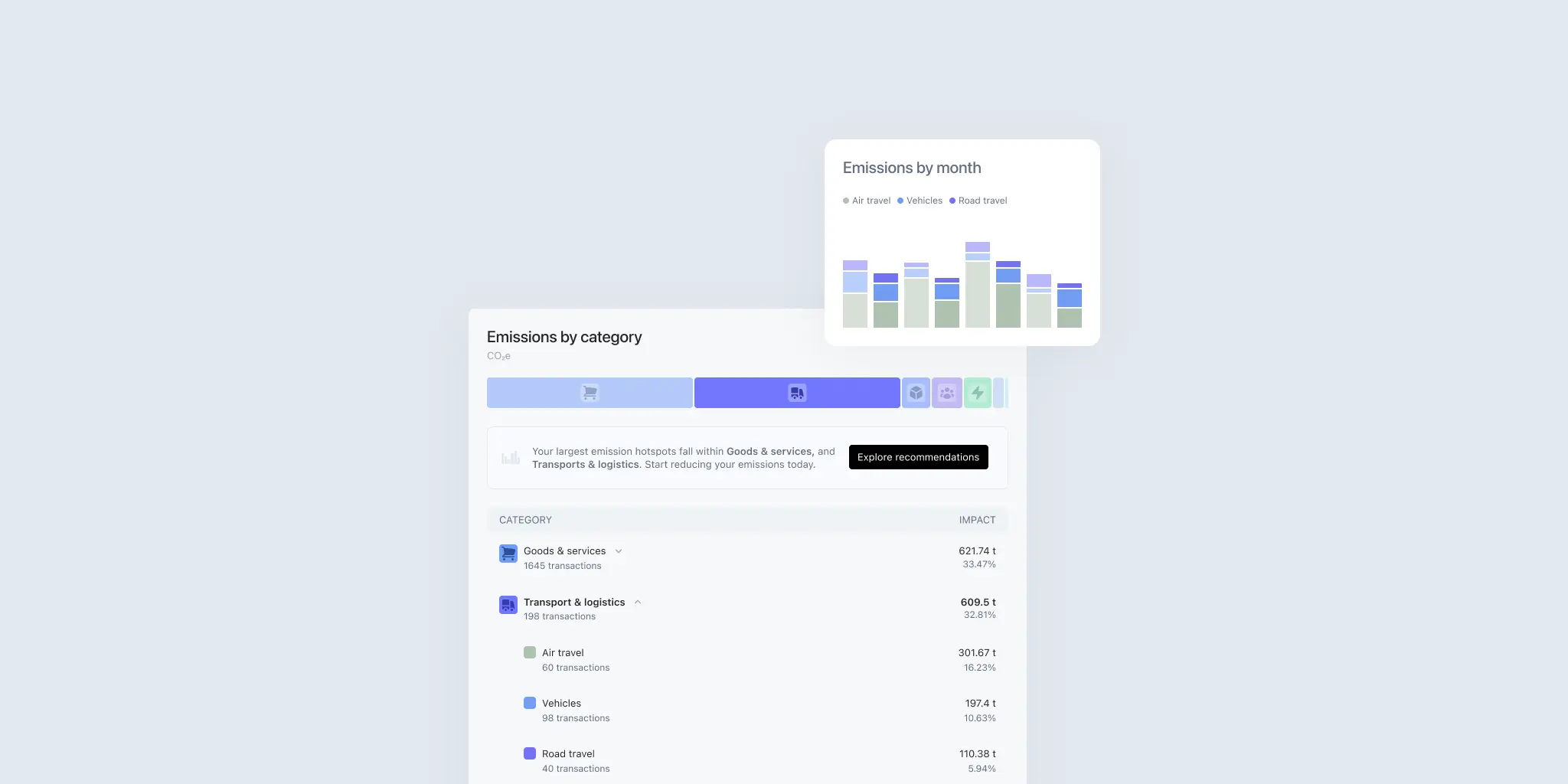
- Coolset's carbon management platform uses advanced analytics to pinpoint emission hotspots by supplier and spending category for targeted decarbonization.
For growing companies, understanding where greenhouse gas emissions are concentrated is both a sustainability priority and a business intelligence challenge. As companies expand — adding new offices, hiring more staff, expanding their supply chain — emission hotspots can shift quickly. Identifying them accurately is the prerequisite for effective reduction.
This article explains how to identify emission hotspots in growing companies and what to do once you’ve found them.
What is an emission hotspot?
An emission hotspot is a category, activity, or supplier that accounts for a disproportionately large share of a company’s total greenhouse gas emissions. Common hotspots for mid-market companies include:
- Purchased goods and services (Scope 3 Category 1) — often the largest category
- Business travel — especially air travel
- Employee commuting
- Cloud computing and digital infrastructure
- Freight and logistics
- Specific high-emission suppliers
The 80/20 rule often applies: a small number of categories or suppliers account for the majority of emissions. Hotspot identification is the process of finding them.
Step 1: Complete a baseline emissions inventory
You can’t find hotspots without a complete emissions inventory. Start by measuring Scope 1, 2, and 3 emissions across all relevant categories. For growing companies, Scope 3 is usually dominant — particularly purchased goods and services.
Use a spend-based approach for your first inventory if activity data isn’t available. This gives you a fast baseline that’s good enough to identify where your big emissions are. See our guide on measuring your company’s carbon footprint for the full methodology.
Step 2: Analyze by category and supplier
Once you have your emissions inventory, analyze it at two levels:
- By Scope 3 category: Which of the 15 GHG Protocol categories is largest? For most companies it’s Category 1 (purchased goods/services) or Category 6 (business travel).
- By supplier or spend category: Within your largest Scope 3 categories, which suppliers or spend categories drive the most emissions? A handful of high-emission suppliers typically dominate.
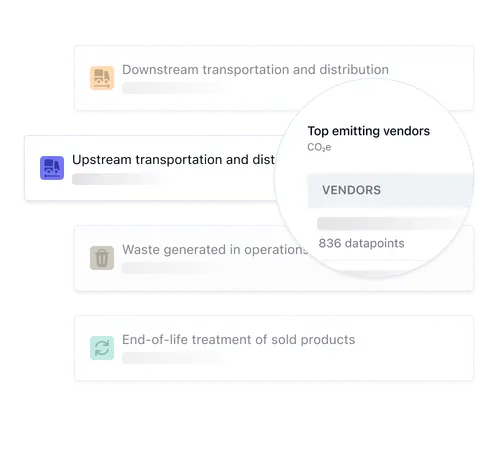
Coolset’s platform provides this analysis automatically, ranking categories and suppliers by emission contribution.
Step 3: Prioritize by impact and controllability
Not all hotspots are equally actionable. Prioritize based on two dimensions: emission magnitude (how big is the hotspot?) and controllability (how much influence do you have over it?).
Categories where you have direct control (energy, travel) are easier to act on quickly. Supply chain hotspots require supplier engagement and are harder to address, but often represent the largest reduction opportunities.
Step 4: Build targeted reduction initiatives
Once you’ve identified and prioritized hotspots, develop specific reduction initiatives for each:
- Energy hotspots: switch to renewables, improve efficiency
- Travel hotspots: implement travel policy, replace flights with trains or video calls
- Supplier hotspots: engage key suppliers, switch to lower-emission alternatives
- Logistics hotspots: optimize routing, shift to lower-emission modes
See our guide to 9 decarbonization methods to reduce supply chain emissions for practical approaches to the most common hotspots.
How Coolset supports hotspot identification
Coolset’s carbon accounting platform automatically identifies emission hotspots from your spend data, ranking categories and suppliers by their emission contribution. The platform supports hybrid calculation approaches — combining spend-based estimates with activity-based data for your most material categories. Book a demo to see it in action.
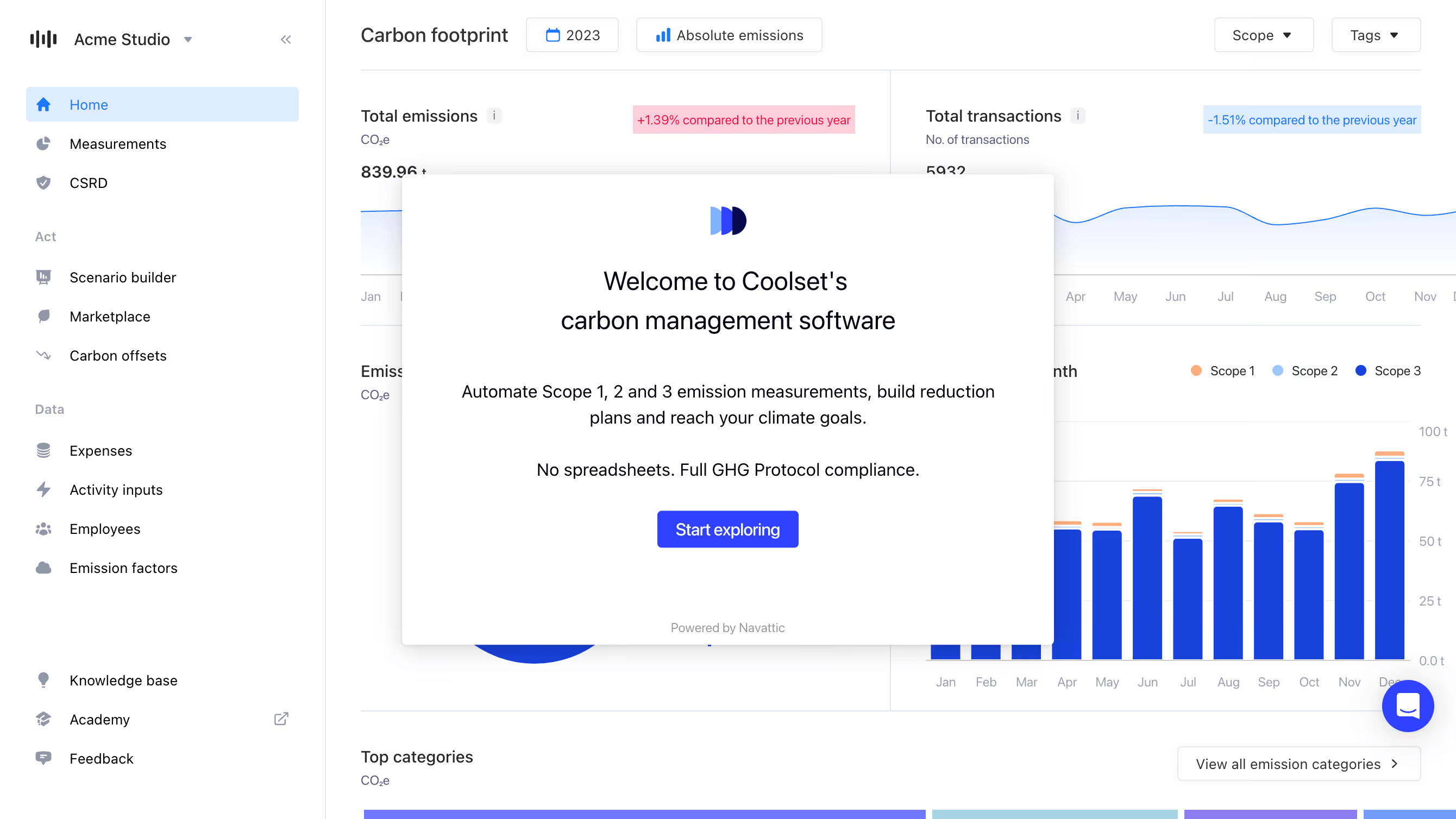
Coolset's carbon management software gives you in-depth insights into your emission hotspots by measuring your scope 1, 2 and 3 emissions.


on mobile screens
to experience this demo.


↘ Check if your documentation meets PPWR requirements
This free compliance checker scans your packaging documentation and maps it against mandatory PPWR data requirements, giving you a clear view of your compliance status. Get actionable insights on documentation gaps before they become compliance issues.
You can't reduce what you can't measure.
Coolset's carbon management software gives you in-depth insights into your emission hotspots by measuring your scope 1, 2 and 3 emissions.

.webp)