Scope 1, 2 and 3 emissions - navigating climate jargon



Disclaimer: New EUDR developments - December 2025
In November 2025, the European Parliament and Council backed key changes to the EU Deforestation Regulation (EUDR), including a 12‑month enforcement delay and simplified obligations based on company size and supply chain role.
Key changes proposed:
- New enforcement timeline: 30 December 2026 for large/medium operators, 30 June 2027 for small/micro operators
- Simplified DDS: One-time declarations for small and micro primary producers
- Narrowed scope: Most downstream actors and non‑SME traders would no longer need to submit DDSs
- New DDS requirement: Estimated annual quantity of regulated products must be included
These updates are not yet legally binding. A final text will be confirmed through trilogue negotiations and formal publication in the EU’s Official Journal. Until then, the current EUDR regulation and deadlines remain in force.
We continue to monitor developments and will update all guidance as the final law is adopted.
Key takeaways
- The GHG Protocol classifies emissions into three scopes: direct operations (Scope 1), purchased energy (Scope 2) and value chain activities (Scope 3), which often account for over 90% of total emissions.
- Understanding all three scopes is essential for accurate carbon reporting and effective reduction strategies under frameworks like the CSRD.
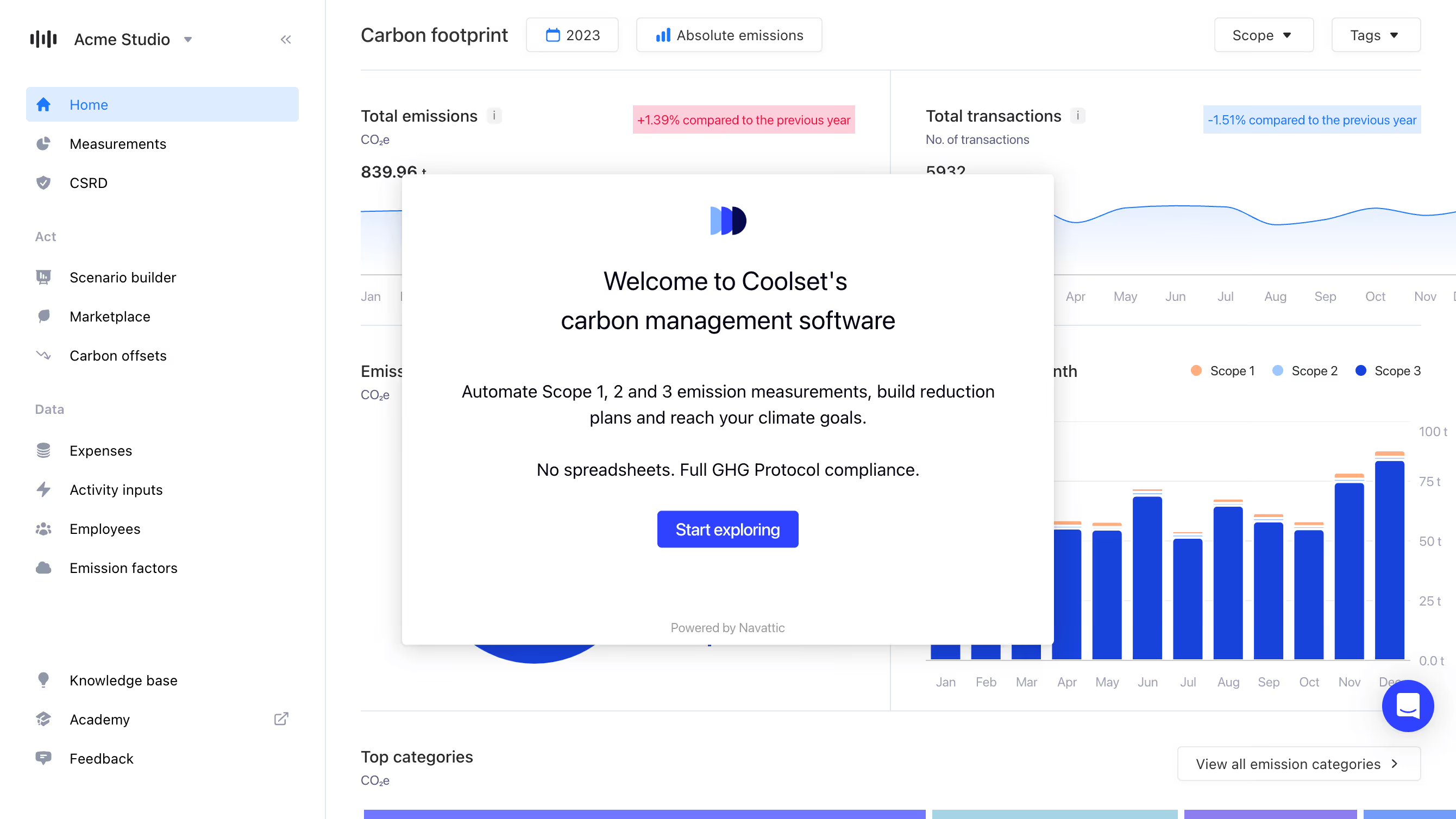
- Coolset measures Scope 1, 2 and 3 emissions with minimal input using climate science and machine learning for accurate, regulation-ready reporting.
In every field of work, technical jargon causes confusion and discussion among outsiders - why can't we stick to simple terms? Well, let us explain…
In this Academy article, we dive deeper into the three emission scopes: 1, 2 and 3. As a part of environmental reporting, over 95% of Fortune 500 companies use the Greenhouse Gas Protocol (GHG Protocol) as their 'golden standard'. The GHG Protocol was developed by the World Research Institute in 2001 and breaks down greenhouse gas emissions into three scopes. For a deeper look at the full framework, including its five reporting principles, calculation methods, and connection to CSRD, see our complete guide to the GHG Protocol.
So what do these scopes entail, and why should a distinction even be made? Aren't all emissions equally important? In the case of the GHG Protocol, it's not a matter of different importance that drives the need to classify emissions. In this case, it's rather the fact that emissions have different bases of origin. In the following paragraphs, we will break down scope 1, 2 and 3 and dissect their origin.
Scope 1 emissions
Scope 1 emissions are defined as direct emissions that a company generates at a firm level. These emissions are direct GHG emissions from sources owned by the company. Some examples include stationary combustion (e.g. fuel for generators), mobile combustion (e.g. fuel in company vehicles), building onsite energy use, fugitive emissions or process emissions. In short: everything the firm burns and consumes that directly produces GHG emissions
Scope 2 emissions
Scope 2 covers indirect emissions from purchased energy. Although these emissions are originally generated elsewhere, they are still part of a company's emission responsibility and must be counted as such. In the end, if the company wouldn't consume the energy, it would never been produced in the first place. Some examples of scope 2 emissions are purchased electricity, heating or cooling. These emissions are easily abated and can for instance be reduced by opting for more sustainable energy sources.

Scope 3 emissions
Scope 3 covers all indirect emissions in the value chain. For most companies, their carbon footprint consists largely of scope 3 emissions - often >90%. Did you know that for Nike, their scope 3 impact accounts for over 98% of total emissions?

These emissions are a consequence of the company's activities but occur from non owned sources. These include emissions generated in the supply chain, such as purchased material, emissions from business travel or waste generated in operations.
Currently, EU regulations under CSRD require listed companies, banks, insurance companies and public-interest entities to report scope 1 & 2 emissions. So then why is it important to measure scope 3 emissions as well? In many cases, as we see with Nike, emissions along the value chain represent the largest GHG impact.
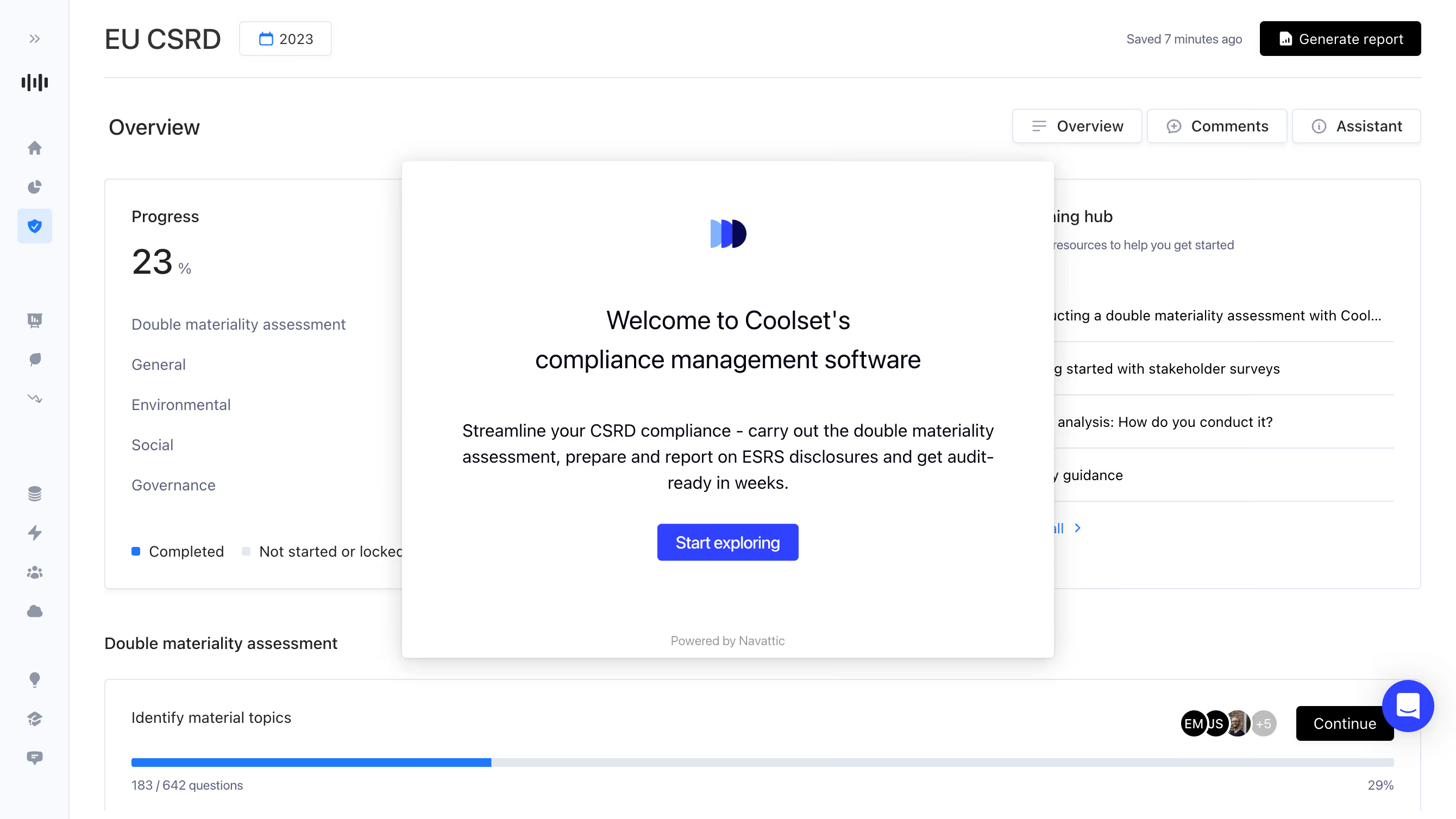
Coolset helps companies gain insights in their emissions - including scopes 1, 2 and 3 with minimal input by leveraging the latest climate science and machine learning. Eager to learn more? Request a demo and see for yourself how we help our clients make an impact.

on mobile screens
to experience this demo.


↘ Check if your documentation meets PPWR requirements
This free compliance checker scans your packaging documentation and maps it against mandatory PPWR data requirements, giving you a clear view of your compliance status. Get actionable insights on documentation gaps before they become compliance issues.

.webp)