4 biggest challenges when measuring Scope 3 emissions



Disclaimer: New EUDR developments - December 2025
In November 2025, the European Parliament and Council backed key changes to the EU Deforestation Regulation (EUDR), including a 12‑month enforcement delay and simplified obligations based on company size and supply chain role.
Key changes proposed:
- New enforcement timeline: 30 December 2026 for large/medium operators, 30 June 2027 for small/micro operators
- Simplified DDS: One-time declarations for small and micro primary producers
- Narrowed scope: Most downstream actors and non‑SME traders would no longer need to submit DDSs
- New DDS requirement: Estimated annual quantity of regulated products must be included
These updates are not yet legally binding. A final text will be confirmed through trilogue negotiations and formal publication in the EU’s Official Journal. Until then, the current EUDR regulation and deadlines remain in force.
We continue to monitor developments and will update all guidance as the final law is adopted.
Key takeaways
- Scope 3 emissions account for over 70% of most companies' carbon footprints but remain the hardest to measure due to supplier data gaps and complex value chains.
- Key challenges include lack of standardized reporting, limited supplier readiness and difficulty quantifying emissions from services and multi-tier supply chains.
- Coolset's carbon management platform measures Scope 1-3 emissions using GHG Protocol methodology with automated data collection and supplier engagement tools.
Scope 3 emissions — the indirect greenhouse gas emissions in a company’s value chain — represent the largest part of most companies’ carbon footprints, often accounting for more than 70% of total emissions. Yet they are also the hardest to measure. This article examines the biggest challenges companies face when measuring Scope 3 and practical approaches to overcoming them.
Why Scope 3 is so difficult to measure
Unlike Scope 1 and 2 emissions (which come from sources your company directly controls or can easily meter), Scope 3 emissions span your entire value chain — upstream through suppliers and raw materials, downstream through customers using your products. This creates several structural challenges:
- Data lives outside your organization: Scope 3 emissions are generated by thousands of suppliers and customers, none of whom are required to share their emissions data with you
- 15 categories of varying complexity: The GHG Protocol defines 15 Scope 3 categories, each with different data requirements and methodologies
- No single standard calculation approach: Spend-based, activity-based, and supplier-specific methods all produce different results
- Year-on-year comparability: As your business changes and data quality improves, maintaining consistent comparability is technically challenging
Challenge 1: Supplier data availability
The most significant challenge for most companies is getting emissions data from suppliers. For purchased goods and services (Scope 3 Category 1) — typically the largest category — the most accurate approach is to use supplier-specific data. But most suppliers don’t calculate or share this data.
Practical approaches: start with spend-based estimates as a baseline; identify your top 10–20 highest-emission suppliers and engage them directly; use the GHG Protocol’s hybrid approach to combine spend-based for most categories with supplier-specific for material ones.
Challenge 2: Data quality and methodology consistency
Spend-based calculations use industry-average emission factors that may not reflect your specific supply chain. Activity-based data requires manual collection across many sources. Supplier-specific data requires third-party verification. Choosing the right methodology for each category and applying it consistently is a significant analytical challenge.
Challenge 3: Organizational data silos
Scope 3 data comes from across your organization — procurement (Category 1), HR and travel (Category 6), logistics (Category 4), facilities (Category 5). Getting consistent, clean data from these functions requires internal coordination that many sustainability teams lack the authority to enforce.
Challenge 4: CSRD assurance requirements
Under CSRD, your Scope 3 disclosures will go to limited assurance. This raises the bar significantly compared to voluntary reporting — every figure needs a traceable source and a documented methodology. The data quality standards required for assurance are substantially higher than most companies’ current practices.
Practical approaches to Scope 3 measurement
- Start with a spend-based baseline: Use your financial data to get a fast, complete first inventory
- Identify hotspots: Which categories and suppliers account for the most emissions?
- Prioritize high-impact categories for improvement: Move from spend-based to activity-based data for your top emission categories
- Build supplier engagement: For Category 1, engage your highest-emission suppliers to collect actual data
- Build internal governance: Establish data collection processes that don’t require heroic effort each year
How Coolset supports Scope 3 measurement
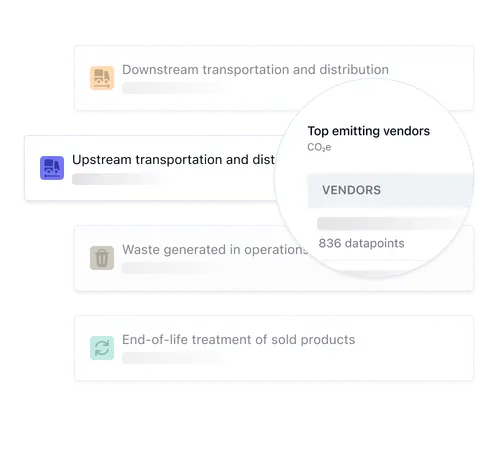
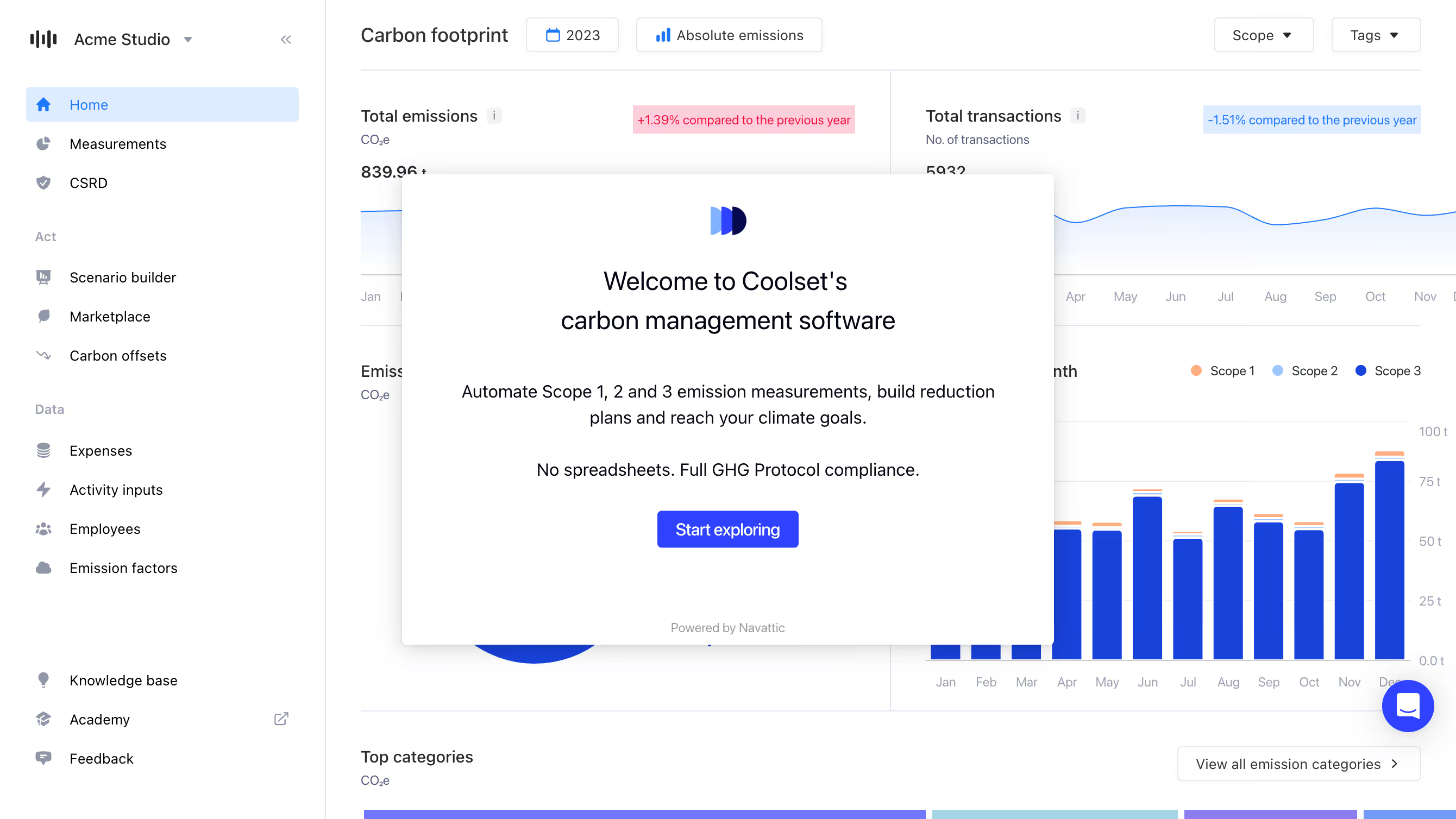
Coolset’s carbon accounting platform supports the full spectrum of Scope 3 calculation methods — from spend-based estimates to activity-based and supplier-specific data — in a single system. The platform automatically identifies emission hotspots, supports supplier data requests, and maintains the audit trail needed for CSRD assurance. Book a demo to see how it works.
Measure Scope 1, 2 and 3 according to the Greenhouse Gas Protocol methodology with Coolset's decarbonization platform.

on mobile screens
to experience this demo.


↘ Check if your documentation meets PPWR requirements
This free compliance checker scans your packaging documentation and maps it against mandatory PPWR data requirements, giving you a clear view of your compliance status. Get actionable insights on documentation gaps before they become compliance issues.
Measure Scope 1, 2 and 3 according to the Greenhouse Gas Protocol methodology
Measure Scope 1, 2 and 3 according to the Greenhouse Gas Protocol methodology with Coolset's decarbonization platform.

.webp)